Start with today’s options.
Ask what is available, then use clear photographs or familiar pictures. Our old flavor board is a record of an experiment, not a shopping list for your visit. Check ingredients separately with staff.
 Explore all
 JournalReal family days, favorite people, and the little things worth noticing.
 Places & days outFind a place, check the practical details, and leave a little room in the plan.
 Picture cards & toolsMake a choice visible, picture a visit, or prepare a note to take along.
 Home & findsFamiliar comforts, useful finds, and small changes that earn their place.
 Family & supportCommunication, shared care, school questions, and time for yourself.
A family field note · Rancatore’s, Lexington
At Ranc’s, we photographed the flavor case and tried a picture-based way to show James the options. Here’s what we made—and what another family or scoop shop could take from it.
The choice belongs to the customer
A case full of ice cream offers plenty to choose from. The question we brought to Ranc’s was how to put those choices in a form James could consider.
We were heading to Rancatore’s in downtown Lexington—Ranc’s, as we call it—and I had my phone with me. James, my 14-year-old son, is autistic and non-speaking. He communicates in ways that include pointing and using his iPad, so clear pictures are part of our everyday life.
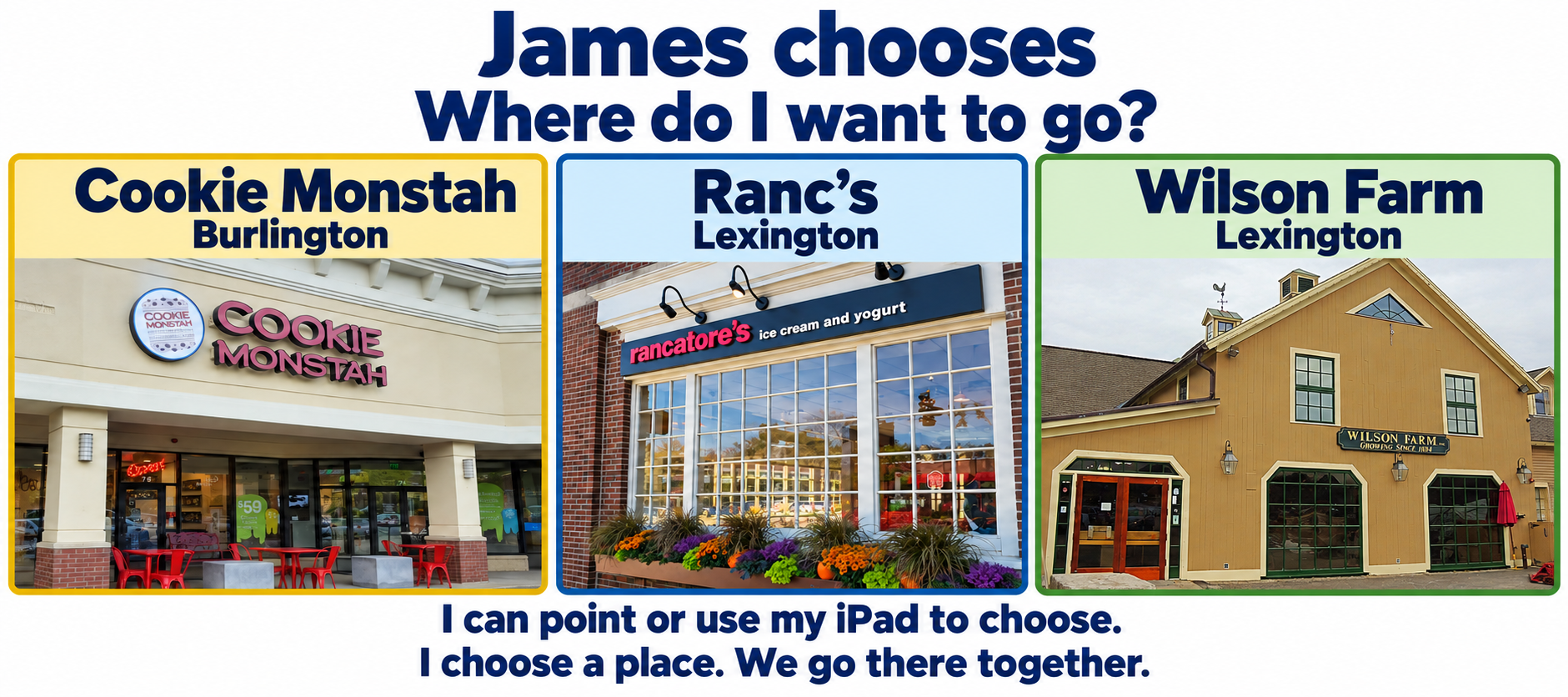
We had already made a little visual board to choose where to go. Ranc’s, Cookie Monstah, and Wilson Farm each had their own picture. Once we reached the ice cream shop, there was another decision waiting for us: the flavors.
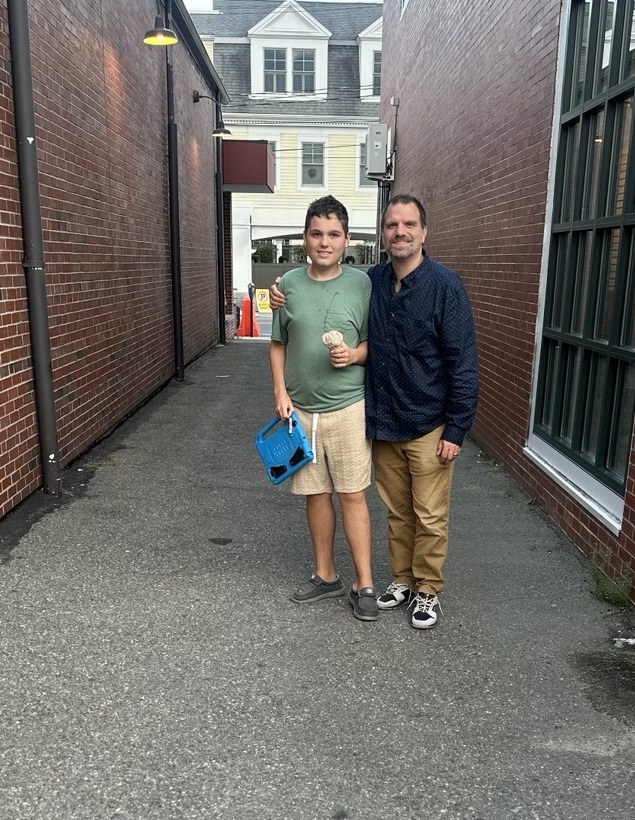
Rather than try to recite the entire case out loud, I photographed the actual displays and shared them with AI. The idea was simple: bring the choices off the labels and onto a screen we could look at together.
Our finished page was not a perfect menu or a finished communication system. It was a first attempt that needed checking. The photographs below show the source and the original result, including the parts we would simplify another time.
We ended up with a photo just outside, an ice cream cone in hand. That ordinary afternoon—not the technology—is the point of the story.
A small experiment, right at the counter
These are the real photographs and the original combined choice board we made during our outing.
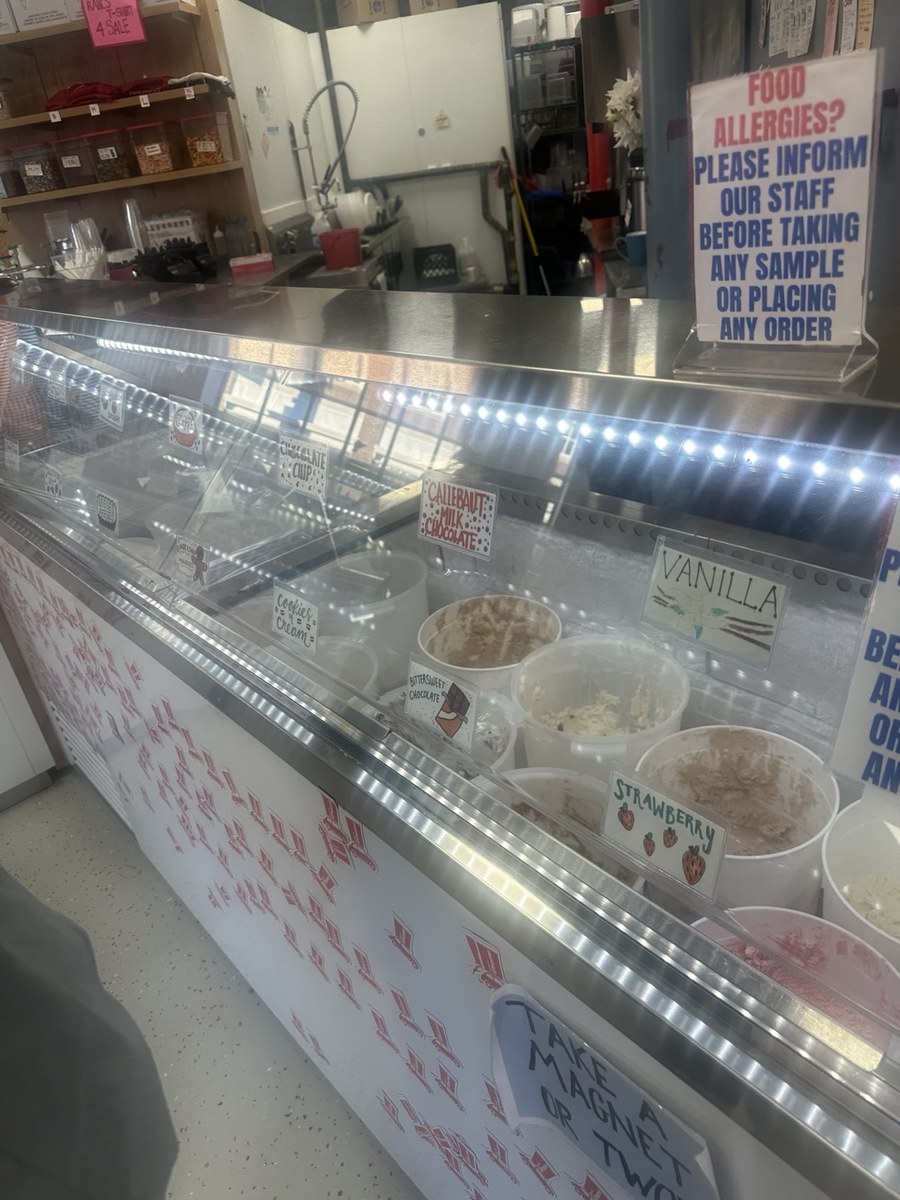
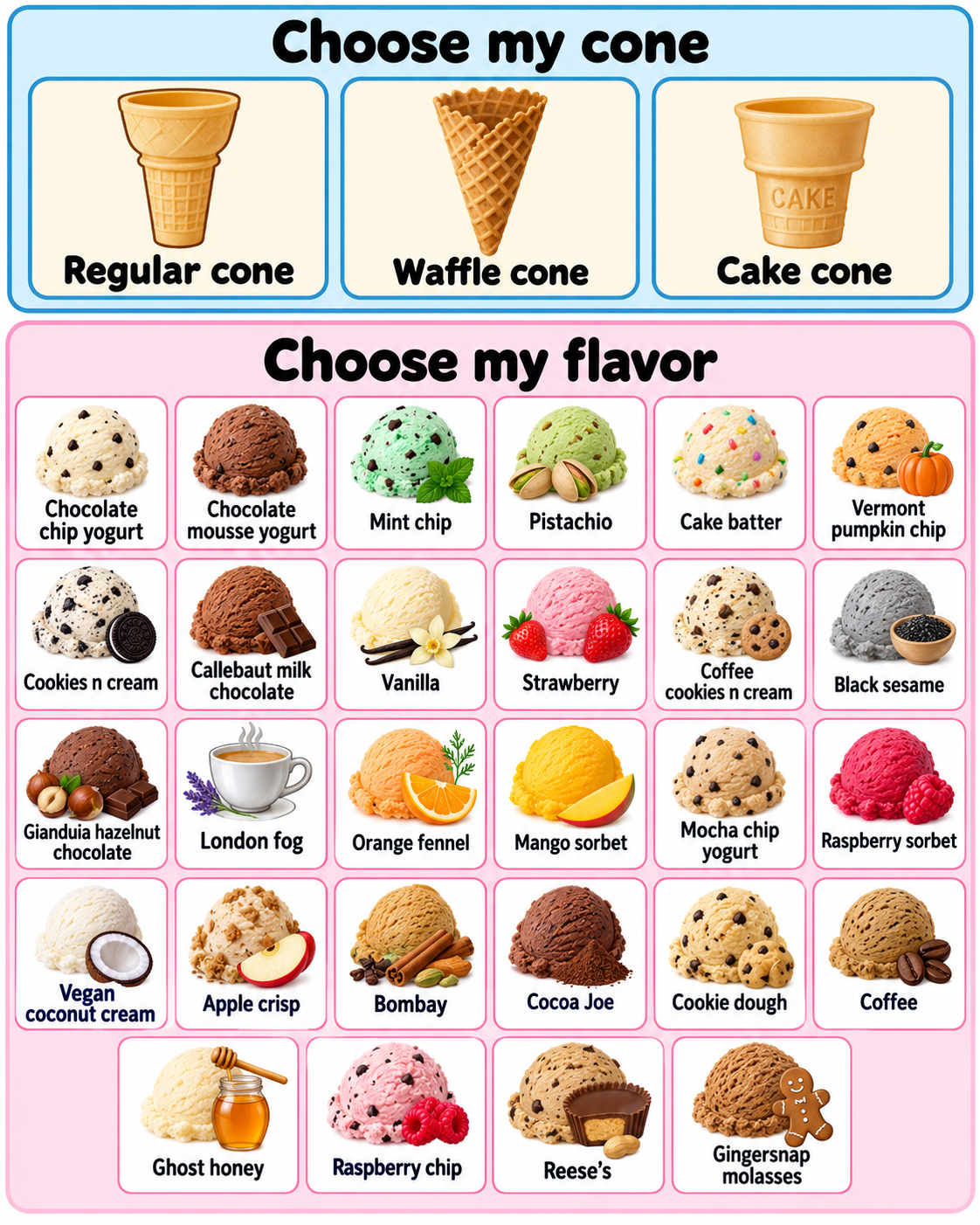
The photographs document what we saw. The AI illustrations are an attempted translation, not independent confirmation of the labels, ingredients or choices available. Do not use this example as a current menu.
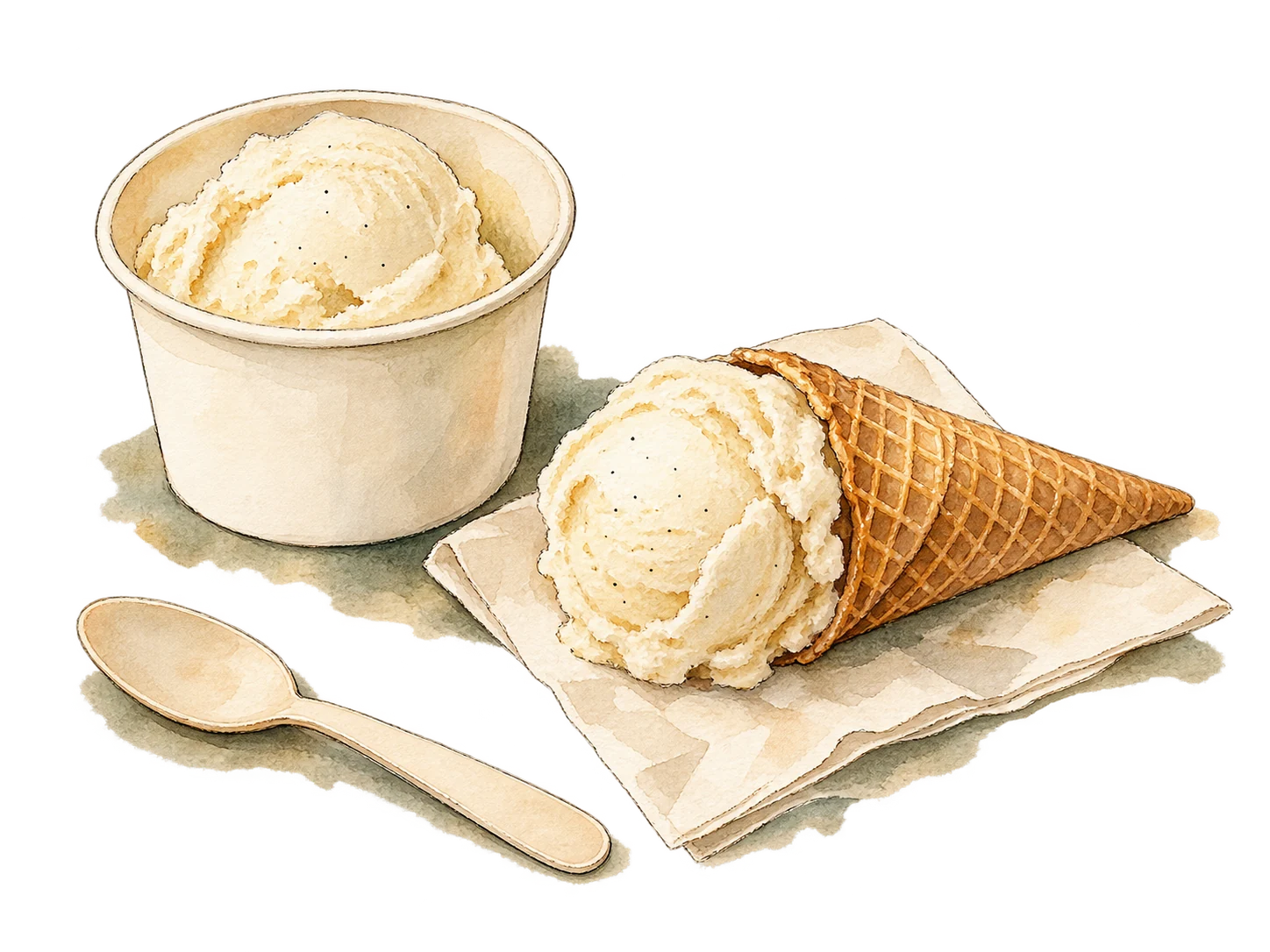
Before the ice cream counter
We started with a visual destination board: Cookie Monstah in Burlington, Ranc’s in Lexington and Wilson Farm in Lexington. Each place had a familiar storefront picture rather than a generic picture of a cookie or an ice cream.
Then, at Ranc’s, we made the combined cone-and-flavor board shown above. Its original layout keeps three cone choices at the top and the labeled flavors below. Another version could show these separately rather than presenting everything at once.
The technology wasn’t making the choice for James. It was helping us show him the choices.
A few things I learned
The AI was quick, but it wasn't automatically right. It can invent a flavor, misread a handwritten label, or make a beautifully crowded page. Our large flavor board was a first pass; a shorter display of the choices James wanted to consider might be easier to navigate.
The real photos gave us something concrete to check. The board was never meant to replace James’s established augmentative and alternative communication (AAC) supports, or his ability to say no, ask for something different, or take a break.
Sometimes the best visual is simply the photograph you already took. A picture cannot establish ingredients or allergen safety: ask staff about ingredients and cross-contact rather than inferring either from a label or illustration.
For your next scoop
This is what we would take from our Ranc’s experiment into another visit. Adapt the idea to the person—not the person to the board.
Ask what is available, then use clear photographs or familiar pictures. Our old flavor board is a record of an experiment, not a shopping list for your visit. Check ingredients separately with staff.
Try flavor and cup-or-cone as separate choices. Start with a manageable display while keeping a way to ask for other options. A shorter board should not silently remove the person’s right to choose something else.
Keep the person’s usual communication available. Accept pointing, a device, speech or another familiar response without turning ordering into a test. Changing a choice, taking a break and declining are choices, too.
Decide where eating will work and how to finish the visit. You do not need a second activity or a perfect photograph to make an ice cream stop worthwhile.
Start with the free editable picture cards ↓
These are family planning ideas, not an individualized communication assessment. Use familiar supports and the advice of the person’s own communication team where relevant.
For independent ice cream shops & retailers
The useful question for a shop is not whether it needs an AI system. It is whether a customer can find out what is available, take the time they need and communicate a choice in their own way.
A simple, current picture menu or clear photo of available flavors can be worth trying. Use readable labels, mark sold-out items and check information with staff. Pictures should not substitute for ingredient and allergy information.
Address the customer, not only the person accompanying them. Make room for a phone, communication device or picture board, and ask what assistance would be useful rather than assuming.
When feasible, let someone consider the choices away from the immediate ordering position without losing their opportunity to order. Do not assume that a customer who needs more time needs fewer choices.
Share concrete details about ordering, seating, entrances and any verified quiet-hour arrangements. A good individual visit is not the same thing as a formal sensory-friendly program or a universal accessibility guarantee.
A distinction worth keeping: these are suggestions drawn from our family’s perspective. We are not claiming Rancatore’s has adopted them, provided our board or endorsed this guide. Shops can share the story as a conversation starter without making those claims.
From our camera roll
Unaltered-in-content photos from our visit, not stock images or AI depictions of the shop.
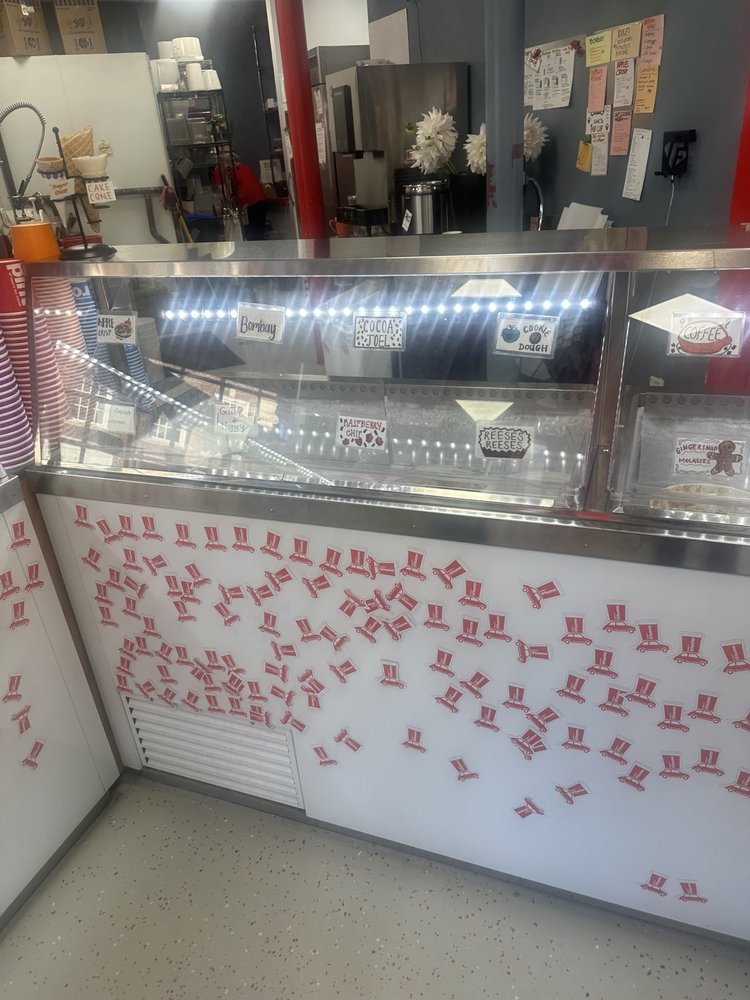
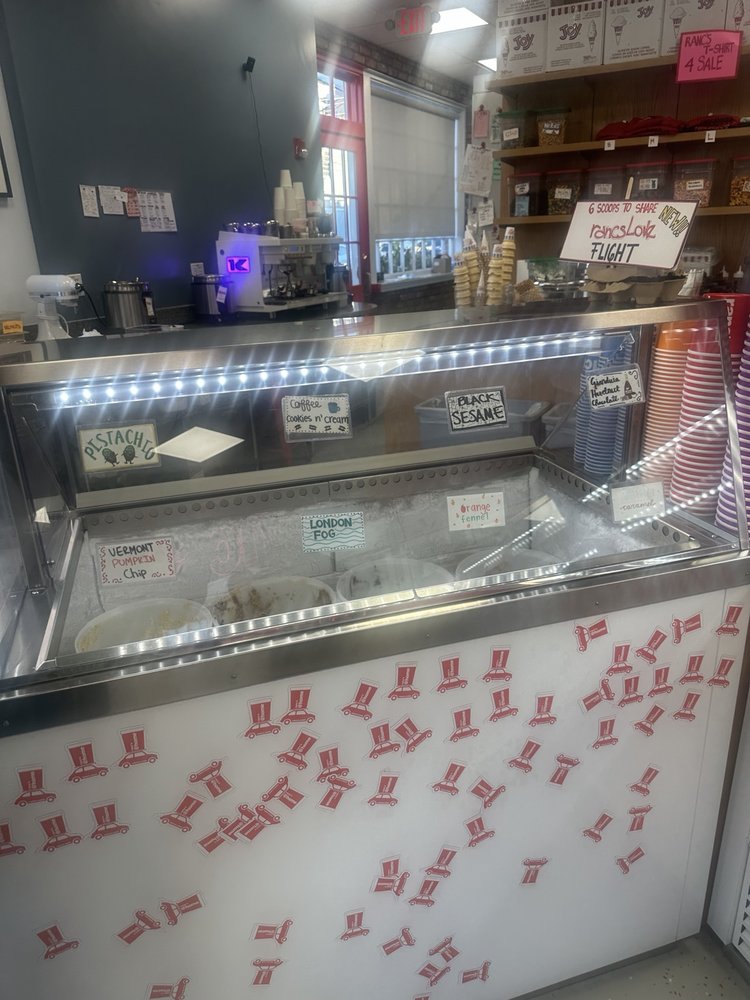
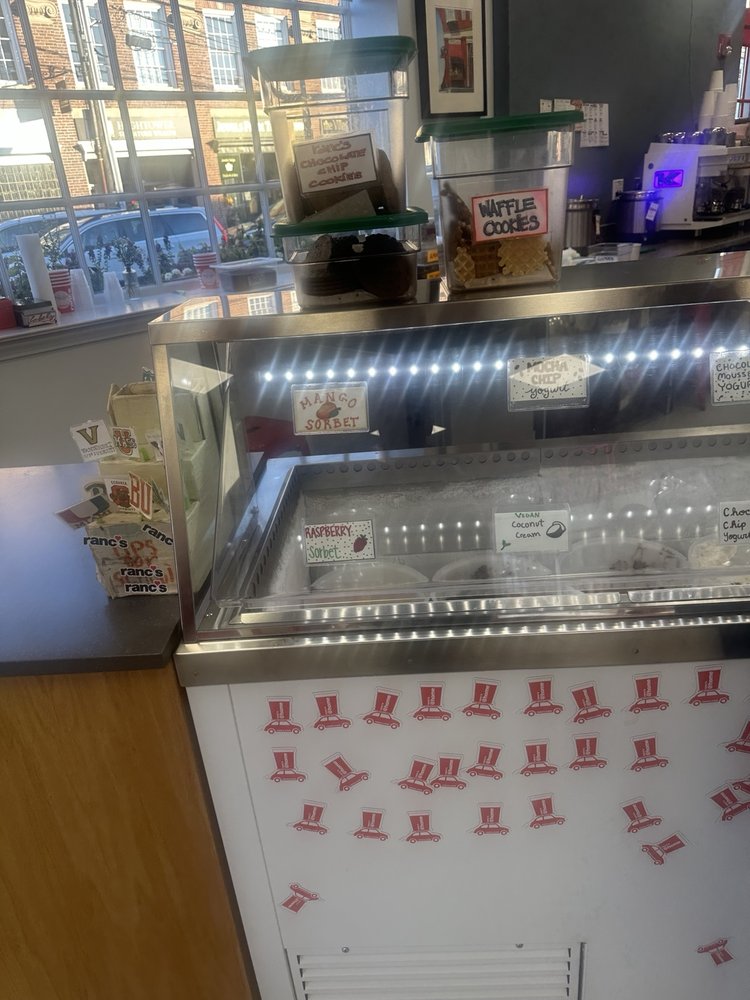
The part worth remembering
A scoop of ice cream is an ordinary pleasure. A chance to choose it for yourself should be ordinary, too.
Our family field note from Rancatore’s, Lexington, Massachusetts. This is an example of a personal visual support—not a substitute for individualized AAC guidance.
Planning your own stop? Read our Rancatore’s, Lexington field note for visit details, parking, and practical access notes.
Pictures to take with you
Choose the pictures that are familiar and useful. Change a label, save a card, or print this little set. These generic cards are a starting point, not a flavor menu; check that each picture matches what you are trying to communicate.
Keep the person’s usual communication available. These are independent picture communication cards, not official PECS® materials. Generic place illustrations do not show a venue’s actual layout.
Stories & useful next steps
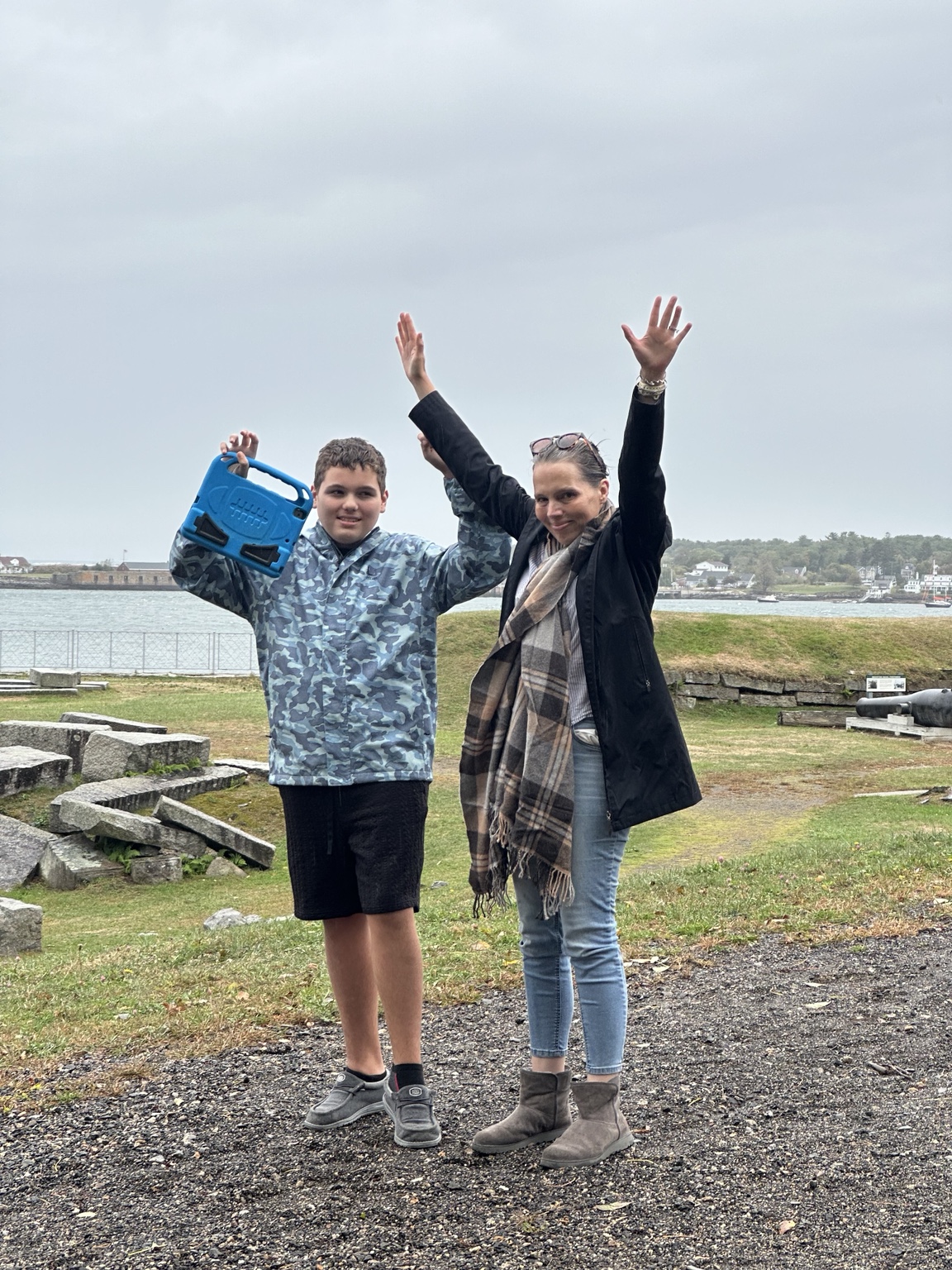
A note on motherhood, family memories, and being in the picture.

Find practical help, time for yourself, and ideas to enjoy together.

Browse familiar stops, access notes and New England outing ideas.