
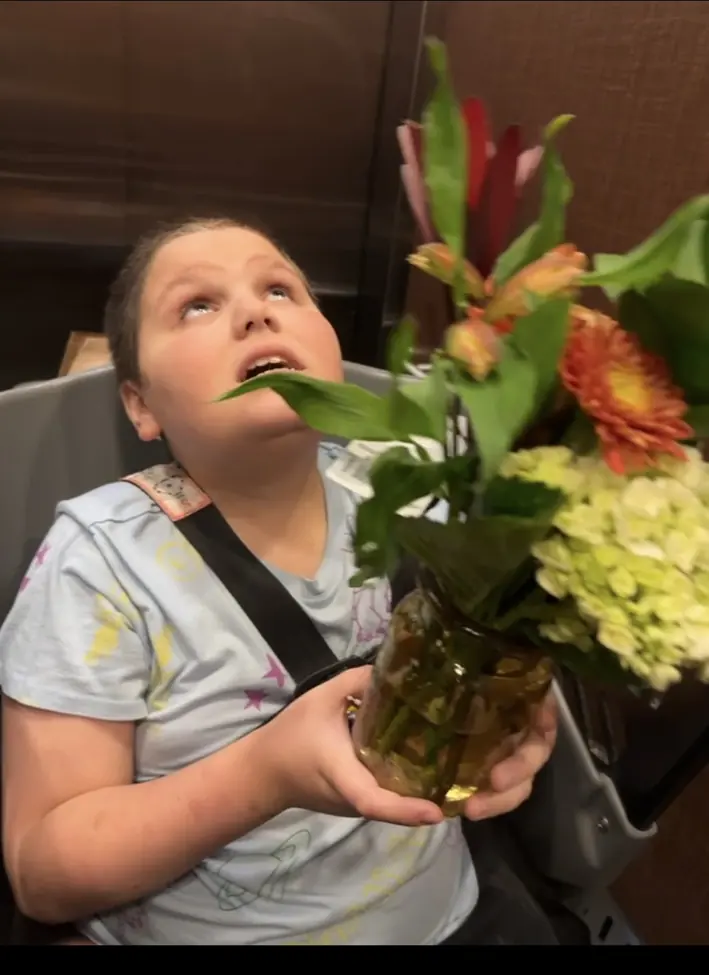
There is a bouquet in our Wegmans photograph, held by a family member sitting in Caroline’s Cart. I like that the flowers are there. They keep the picture firmly in the territory of ordinary life: shopping, choosing something nice, and being out together.
Access conversations can become very grand very quickly. Sometimes the useful question is much smaller. Is the thing that helps us take part actually here, and can we use it when we arrive?
An errand is a place in the community.
Grocery shopping is not usually promoted as a family attraction. It still contains decisions, familiar routines, people, food and the possibility of finding something lovely. Those ordinary opportunities matter.
A person can need substantial physical or communication support and still have preferences about the outing. Speak to them. Keep their usual ways of choosing and responding available. Getting the shopping done and including the person are parts of the same visit.
Ask for the practical information.
Our photograph documents using Caroline’s Cart on that visit. It does not establish that a cart will be available at every Wegmans, or that it will be free when another family arrives. Contact the branch you intend to use and ask where the cart is kept, how to find it and who can help with questions.
Use equipment according to its instructions and the person’s established support needs. If you need particular dimensions, limits or assistance, obtain that information before relying on it. A warm welcome is welcome; the usable details are what make the plan concrete.
Leave room for the bouquet.
The photograph is about the cart, but it is also about the flowers. That combination feels like this whole publication in miniature. A practical arrangement makes room for an ordinary pleasure, and neither needs to disappear from the story.
For another shopping trip, I would keep the list manageable and the ending clear. The person should be able to ask for a pause or to finish. There is no obligation to visit every aisle just because the trolley has wheels.