
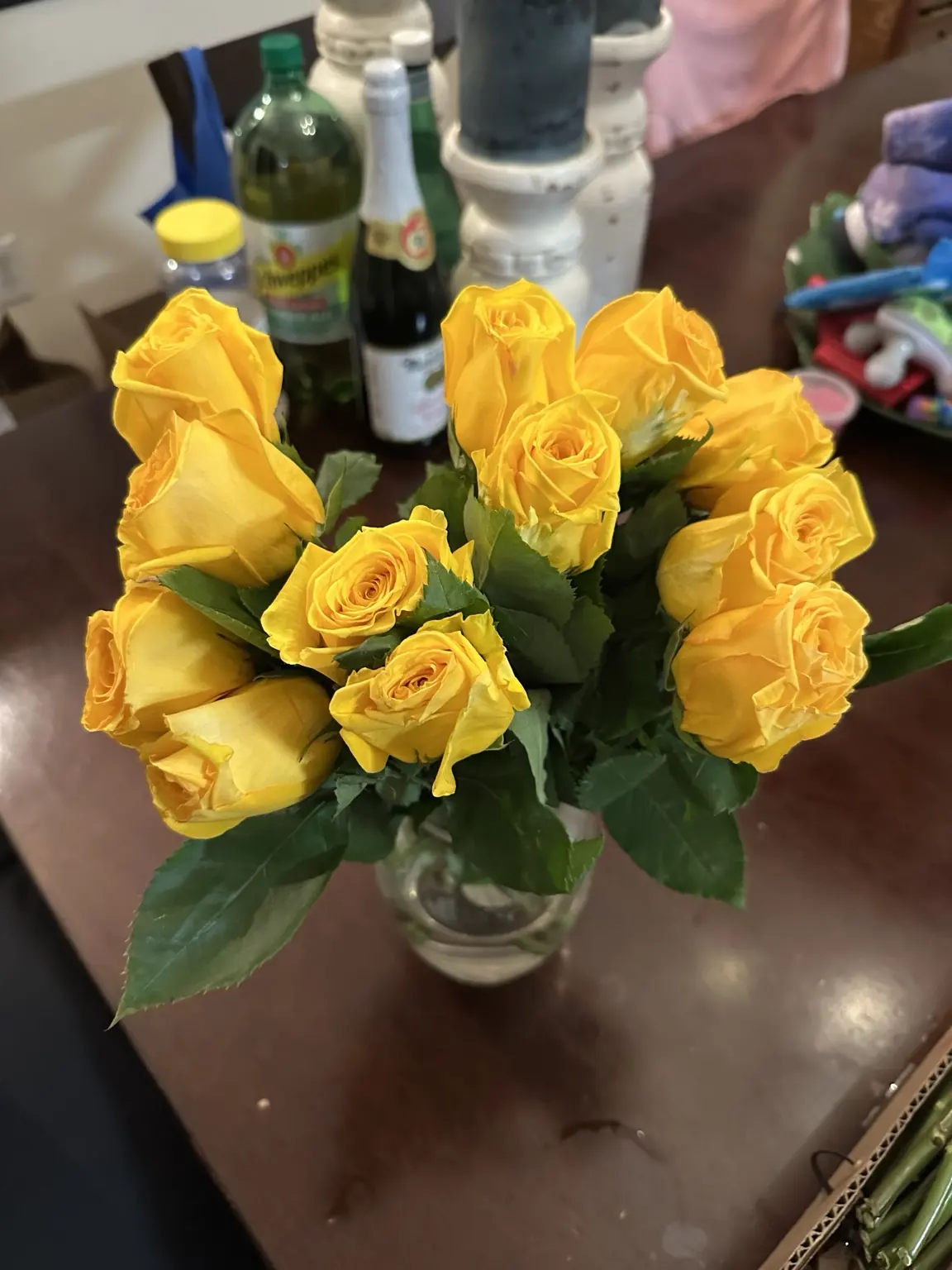
There are yellow roses on the table. There are also bottles, fidgets and the assorted things a household produces by being occupied. This seems to me a reasonably accurate portrait of family life.
I want a lovely home. I also want a home that works for the people living in it. Those ambitions have to share a table, along with the flowers and whatever somebody put down five minutes ago.
Beauty is allowed to arrive before the reset.
It is tempting to imagine flowers as the finishing touch: first the surfaces are cleared, then the room is arranged, and finally the vase makes its entrance. In real life, the flowers may arrive while the rest of the house is pursuing several independent projects.
Put them in water anyway. A small pleasure does not need to wait until the household has earned it through tidiness. The yellow roses in this photograph are doing their job perfectly well without a vacant tabletop.
Useful things are not styling mistakes.
A fidget, a communication device or a familiar object may have a real job in someone’s day. Before moving it out of sight, find out whether that makes life easier or merely makes a photograph simpler.
This does not mean every object must remain wherever it landed. It means organizing around use. Keep needed things reachable. Give the frequent arrivals a place to return to. Ask the people using the space what belongs close, rather than silently redesigning their routines around a picture.
Clear enough space for the next good thing.
A practical reset can be small: move the empties, put away what has finished its job, wipe the part of the table you need, and leave room to sit. The aim is to make the next meal, conversation or activity easier.
The photograph can keep a little of the surrounding life. Flowers, fidgets and clutter are a reasonably good introduction to us. I can enjoy the roses and put the bottles away later; it need not become a philosophical crisis.