
My Small World · Bath, England
A welcome before you walk through the door.
A little toy-shop sign, a place built around play, and a useful idea to bring home to our own Main Streets.
A photograph of a sign outside My Small World, a toy shop in Bath, England, caught my eye. It announces that the shop is autism friendly. Then it gets to the part I especially like: what that means when you actually arrive.
The sign offers to lower the music, soften the lighting and give people space. It reassures visitors about excited play, noise and moments of overwhelm. It invites families to say what would help.
“Give you space to be you.”
That is a lovely thing to encounter before you have even opened the door.
The shop behind the sign
A whole little world of play.
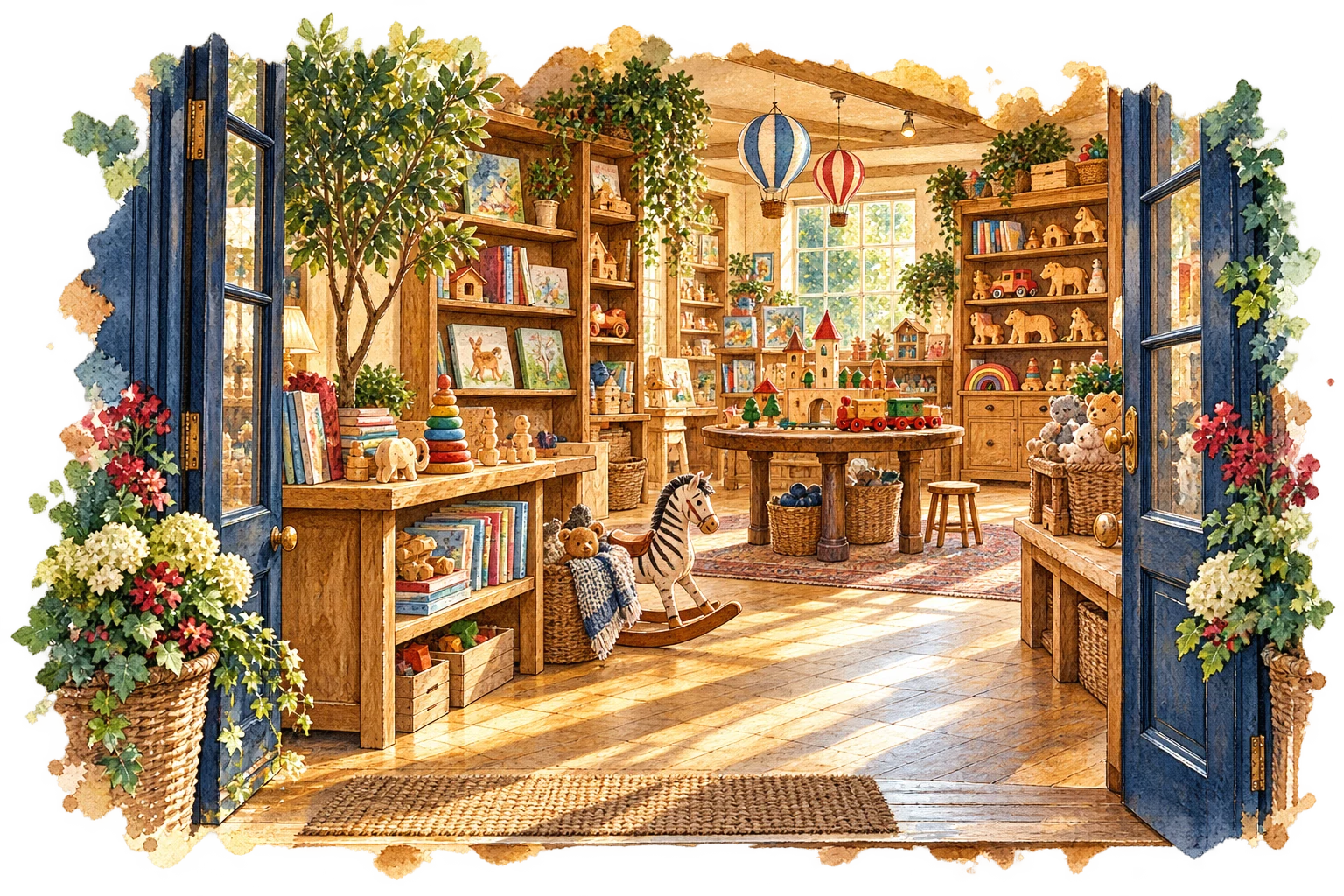
My Small World is an independent toy shop in Bath’s SouthGate shopping area. In the shop’s own account of its beginnings, the idea grew from a search for a special first-birthday present in 2003. That very personal starting point feels fitting for a business whose welcome has travelled so far beyond its front door.
The team describes a shop with trees, changing seasonal foliage, birdsong and shelves of books, games, toys and things to make. Play is encouraged. The pleasure of looking, touching and discovering something is part of the visit they want to offer.
There is a more recent chapter, too. Revo named My Small World its 2025 Independent Operator of the Year. The award’s description highlights the newer SouthGate store, its playful interior and a sensory space for neurodivergent families. That recognition helps put the much-shared sign in context: the welcome is part of a wider approach to the shop.
The relief is in the details.
When an ordinary errand takes planning, a specific welcome gives you something to work with. You can picture asking for the music to come down. You know that needing a little room is something the staff have already considered. One less conversation has to begin with an explanation.
On its own website, My Small World explains that its team includes autistic people and parents of autistic children. The shop describes a commitment to helping families feel comfortable, grounded in that lived experience.
What stays with me is the invitation to arrive as you are. There is room in that idea for a wonderful browse, a very brief visit, a pause, or deciding to try another day.
Why it stays with us
Room for the day you are having.
A toy shop can hold so much promise: something to turn over in your hands, a favorite subject on a bookshelf, the pleasure of choosing. For a family like ours, that invitation also needs room for an older child, an iPad used for communication and a visit that might be shorter than expected.
The particular kindness of the sign is that the adjustments are offered before anyone has to ask. It makes room for a conversation about what would help today. A person can enjoy a lively display and still want the music lowered; someone else may prefer a quiet corner or a little more time.

Bring that welcome to our own Main Streets.
A bookshop, café, farm stand or hotel can make its welcome useful in the same way: tell people what help is actually available, and make it easy to ask. A few places to begin:
- Be specific about sound and light. Say whether music can be lowered, which areas are quieter, and what lighting can be adjusted.
- Offer time and space. Explain where someone can pause and whether they can step outside and return. Ask what helps before stepping in.
- Welcome different ways of communicating. Give people time to point, type, use picture cards or speak through an AAC device. Address the person directly and respect their answer.
- Keep the welcome age respectful. Autistic teenagers and adults belong in the picture, too. Offer help without assuming someone’s interests, abilities or preferred language.
Those are ideas for other businesses to consider, beyond the adjustments described on this particular sign. The best version is a promise the staff understand and can keep.
It can be as ordinary as telling a visitor, “We can lower the music. Would that help?” Then listening to the answer. A welcome has room for “yes,” “no,” “later,” and an answer given without speech.
A small sign can start a conversation.
For our family, the practical details belong right alongside the lovely ones. The invitation to look around matters. So does knowing that asking for a change will be met with understanding.
I would love to see more of that on our own Main Streets: a clear, ordinary welcome, with enough detail to make walking through the door feel a little easier.
If Bath is on your list
Start with SouthGate’s current shop listing and My Small World’s contact page. The listings give different street numbers following the shop’s move, so confirm the entrance before setting out. The shop’s published telephone number is +44 (0)1225 312943.
Ask what can be adjusted during your visit, how the sensory space works and whether there is a quieter time to come. Check the route into the shop, space to move around and nearby accessible toilets separately. A welcoming sign is helpful; each family will still have its own practical questions.