
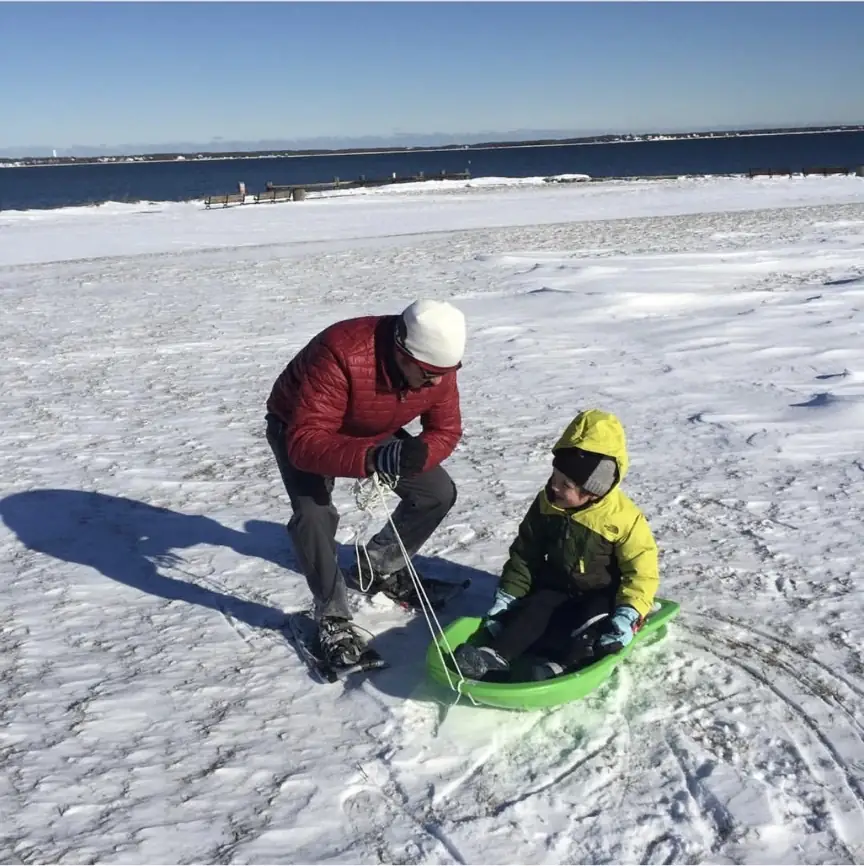
This was not one of those outings assembled from six tabs, a color-coded itinerary and a reservation made three weeks earlier. We rented snowshoes because it sounded fun, put the sled in the car and went to Fort Taber in New Bedford.
There was snow underfoot and the ocean right there beyond it. One person could be on snowshoes. Another could ride in the sled. We were still having the same day together.
The whim was the point.
Sometimes planning makes an outing possible. Sometimes too much planning makes an outing feel like a project before anyone has put on a coat. This one worked because the idea was small enough to act on: find snowshoes, bring the sled, go.
There was no need to turn renting equipment into a declaration that we were now a Snowshoe Family. We could try it once. The equipment did not need to become a hobby, and the outing did not need to prove anything.
Same place. Different way through it.
The photograph is one of my favorite kinds of access picture because nobody is standing beside a sign announcing accessibility. The adaptation is simply part of the day. Snowshoes for one person, a sled for another, and a rope connecting the two.
Family participation does not require everybody to do the same physical thing in the same way. The useful question is whether each person has a workable way to be there, move, communicate, stop and enjoy the place.
Then there was the ocean.
Fort Taber gives a winter outing something slightly ridiculous and wonderful: snow in the foreground and open water beyond it. The City of New Bedford describes the park as a 50-acre waterfront space with more than a mile of ocean frontage and walking, jogging and biking paths.
That does not make every winter surface predictable. Snow, ice, wind and plowing can change the route quickly. For another visit, I would keep the spontaneity and do one very unromantic thing first: check the weather and the conditions we actually need.